The Shop Floor is the Last Place in America Where Your Past Doesn't Matter. Why Are We Trying to Change That?
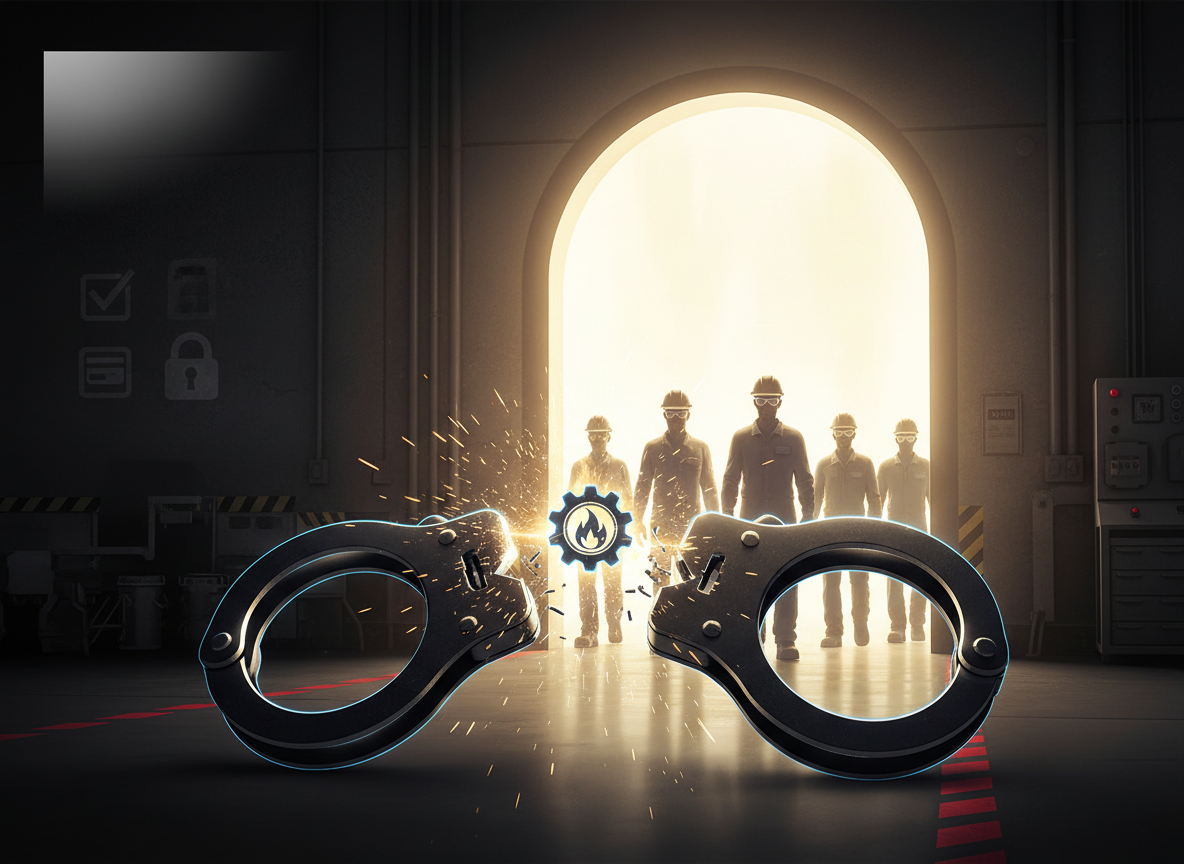
By Drew "The MFG" Crowe
I just got off a call with a manufacturer. Great company. Good pay. Benefits. Real career ladder.
They can't fill 47 positions.
So I asked: "What's your barrier to entry?"
"Clean background. No felonies. Stable work history."
I paused. Then I asked the question that made them uncomfortable:
"So you're telling me you'd rather run short-staffed than hire someone who made a mistake ten years ago?"
Silence.
That's when I realized: We're not protecting manufacturing anymore. We're killing it.
Manufacturing Used to Be America's Second Chance
Tell me if you’ve lived or hear some version of this story
My grandfather got out of the Army in 1952 with nothing but a high school diploma and a strong back. Walked into a factory. They asked if he could show up on time and work hard.That was it.
No background check. No credit score. No personality assessment. No five-round interview process with panel reviews.
They looked him in the eye, shook his hand, and said, "Monday, 7 AM."
He worked there for 38 years. Raised four kids. Bought a house. Sent my dad to college.
That was the deal. Work hard, and America gives you a shot.
Now? We've turned that deal into an obstacle course designed to keep people out.
When Did We Become So Scared?
Here's what kills me: The same industry that built America on the backs of immigrants, high school dropouts, and people running from hard circumstances now won't hire anyone without a spotless past.
We require:
Background checks going back seven years
Credit scores (to run a lathe?)
Drug tests that catch weed from three weeks ago but miss pill addicts
"Cultural fit" interviews that are just code for "Do you look like us?"
References from people who probably don't remember you
And then we act shocked when we can't find workers.
We didn't run out of workers. We built a wall and locked them out.
The Hypocrisy is Killing Me
I've spoken at manufacturing conferences where executives stand on stage and talk about "workforce development" and "attracting the next generation."
Then at the cocktail hour, these same executives tell me:
"Drew, your story is inspiring, but we could never hire someone like you."
Let that sink in.
They'll pay me $25,000 to give a keynote about second chances. But they won't pay someone $18/hour to operate a machine.
They'll applaud the story. They won't take the risk.
What We're Actually Afraid Of
Let's cut the bs. When manufacturers say they "can't" hire people with records or gaps in employment, what they really mean is:
"We're afraid."
Afraid of liability. Afraid of what customers will think. Afraid of insurance implications. Afraid the board will ask questions. Afraid of looking soft.
But here's what nobody wants to admit: That fear is costing you millions.
Every unfilled position costs you:
$75,000 in lost productivity (per role, per year)
Overtime bleeding your budget
Good employees burning out covering shifts
Contracts you can't fulfill
Growth you can't pursue
You're not protecting your company with strict hiring practices. You're strangling it.
The Math Doesn't Lie
Let me show you something that should wake every CFO up at night:
Scenario A: Traditional Hiring
Restrict your talent pool to people with clean backgrounds, perfect work history, and "cultural fit"
Wait 6-9 months to fill critical roles
Pay 20-30% above market rate because you're competing for the same small pool
Lose $75K per unfilled position in productivity
Watch competitors poach your talent because they're not loyal to you, they're just settling
Scenario B: Second-Chance Hiring
Open your talent pool to 70 million additional Americans
Fill roles in 4-6 weeks with motivated candidates
Pay market rate (they're grateful for the shot)
Invest $5K in training and support systems
Get employees who are loyal, hungry, and have something to prove
Which business would you invest in?
But we keep choosing Scenario A because it feels "safer."
Meanwhile, companies doing Scenario B are:
Filling positions faster
Seeing 40% lower turnover
Building stronger culture
Crushing their competition
I'm Going to Say the Quiet Part Out loud
The real reason most manufacturers won't hire people with records or employment gaps isn't about risk management.
It's about class.
It's about maintaining the idea that manufacturing jobs are "good jobs for good people" and if you've made mistakes, you don't deserve access.
It's about keeping certain communities out while complaining those same communities "don't want to work."
It's about protecting a system that makes executives comfortable while the shop floor sits empty.
Don't believe me? Watch how fast policies change when the CEO's nephew gets a DUI.
What Actually Happens When You Take the Risk
You want to know what happens when you hire the "risky" candidates?
I've seen it a thousand times:
The single mom with the employment gap becomes your most reliable second-shift operator because she's not taking this opportunity for granted.
The guy with the felony from eight years ago shows up 15 minutes early every day because this is his shot at rebuilding his life.
The 19-year-old with face tattoos that you almost rejected becomes your best apprentice because he's got something to prove.
The veteran with PTSD who "wouldn't fit the culture" revolutionizes your safety program because he actually understands risk management.
But you'll never see any of this if you don't have the balls to make the hire.
The Question Nobody Wants to Answer
Here's what I want every manufacturing executive to answer honestly:
If your company was struggling to survive, and I told you I had 70 million Americans ready to work hard, learn fast, and stay loyal—but they have messy backgrounds—would you hire them?
Of course you would.
So why are we waiting until we're desperate?
Why not build those systems now, when we have time to do it right?
What This Actually Requires
I'm not saying throw caution to the wind and hire anybody.
I'm saying build systems that assess ability, not history.
Skills assessments instead of background checks as the first filter
Paid trial periods instead of probation threats
Mentorship programs instead of "cultural fit" interviews
Clear paths to advancement instead of dead-end roles
Support systems for people who might need help with transportation, childcare, or reentry resources
This isn't charity. This is smart business.
The companies winning the next decade aren't the ones with the strictest hiring policies. They're the ones brave enough to see talent where others see risk.
My Final Word
Manufacturing was built by people society threw away.
Immigrants. Dropouts. People running from something or running toward something better.
We took them. We trained them. We gave them dignity and a paycheck.
That's what made American manufacturing great.
Now we're trying to gentrify the shop floor. Make it respectable. Keep it clean. Hire only people who look good on LinkedIn.
And we're dying because of it.
The talent is out there. 70 million Americans with records. Millions more in communities we've ignored. Single parents. Veterans. People who just need someone to take a chance.
They don't need your pity. They need your courage.
Stop hiding behind "best practices" and "industry standards."
Stop pretending the barrier is talent when the barrier is fear.
Open the door. Train them. Let them prove you right.
Because the shop floor is supposed to be the last place in America where your past doesn't matter.
Let's keep it that way.
Drew "The MFG" Crowe is a two-time felon who became a manufacturing workforce leader. He's proof that the people you're screening out might be exactly who you need.
Think I'm wrong? Prove it. Email me at mgmt@the-mfg.com and tell me why your hiring barriers are actually necessary. I'll wait.